
FAQ
- Home
- Faq
- About motor
- Should I choose a custom motor or a standard motor?
Should I choose a custom motor or a standard motor?
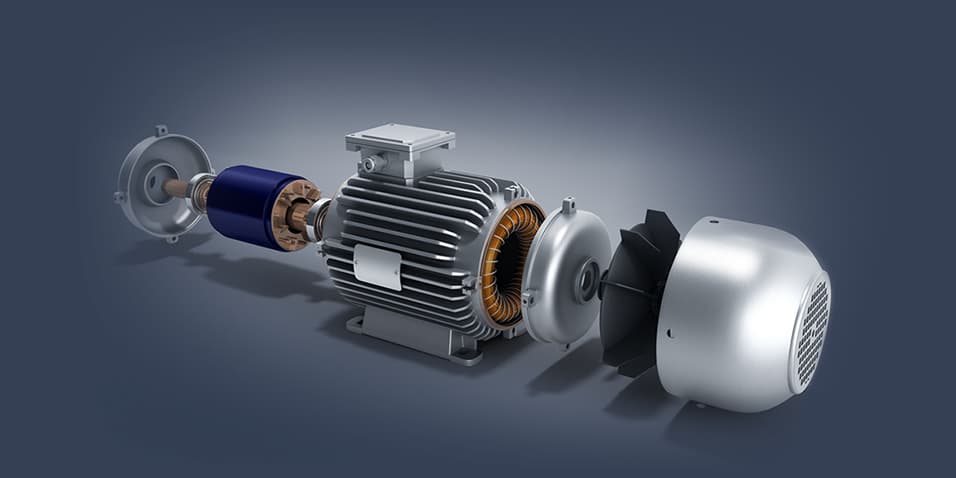
If your application has special specifications, space constraints, or demands optimal efficiency, a custom motor is recommended; if you need fast delivery and parts interchangeability, a standard motor is usually more suitable. Note that a custom motor is not necessarily more expensive—when the requirement falls between standard ratings, customization can actually be more cost-effective. The two involve trade-offs in performance, cost, and delivery time. Below we explain the pros and cons of custom and standard motors and offer selection advice.
Pros and Cons of Custom vs Standard Motors
Advantages of custom motors:- Higher adaptability: custom motors can be designed and adjusted to specific needs for optimal performance and efficiency, with power, speed, and torque selected to match the application for smoother operation.
- Maximum performance: custom motors can be optimized to deliver maximum performance and energy efficiency, helping reduce running costs and energy consumption.
- Unique design: custom motors can be tailored to your design specifications and space constraints for better fit and easier installation.
- Longer lead time: custom motors require specific design and manufacturing, so delivery may take longer than standard motors and should be planned for in advance when ordering.
- Lower interchangeability: as a custom product, if the motor fails and needs replacing, an identically customized product must be found for proper installation.
- Fast delivery: standard motors are usually in stock and can be delivered at any time, which is advantageous when you need a motor urgently.
- Good interchangeability: with standardized mounting dimensions, standard motors from any manufacturer are interchangeable.
- May not fully meet specific needs: the specifications and performance of standard motors may not perfectly match the application, potentially lowering performance and energy efficiency.
- Lack of uniqueness: standard motors are general-purpose products that may lack unique features and design, limiting optimization flexibility.
| Comparison | Custom Motor | Standard Motor |
|---|---|---|
| Spec Fit | Designed fully to needs, best fit | General specs, may not fully match |
| Performance | Optimizable to maximum performance and efficiency | Standard performance, less flexible |
| Lead Time | Longer, requires design and manufacturing | Fast, ready stock |
| Interchangeability | Lower, needs identical custom spec | Good, interchangeable across makers |
| Cost | Depends on requirements; when the requirement falls between standard ratings, a custom design can reuse a smaller frame and only add material, costing less than being forced to use the next size up | Fixed rating steps; if the requirement does not match a standard rating, you may be forced to use a larger frame, raising cost |