BLOG
UL Motor Test Items
November 24,2022
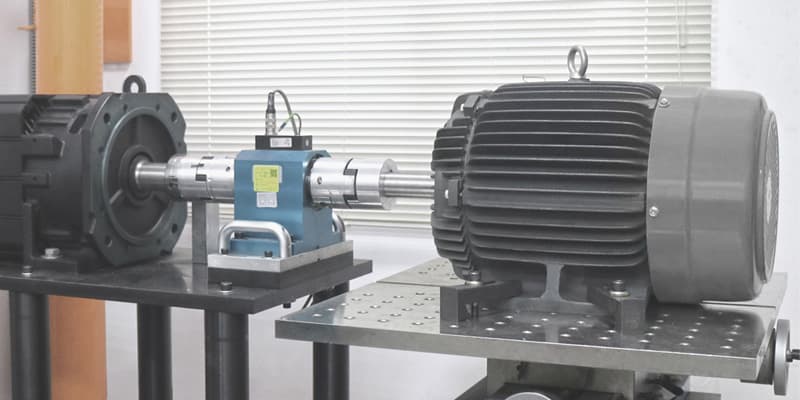
The Kuo Shuay UL motor laboratory provides complete testing for motors from 0.25 to 100 HP, helping confirm performance and safety compliance before export. Common test items include energy-efficiency testing, torque–speed (T-N) curve testing, locked-rotor testing, temperature-rise testing, the circle-diagram method, inverter-driven motor testing, brushless motor testing, and noise–vibration testing. Further reading: Introduction to the UL Motor Laboratory.
Laboratory Testing Capabilities
| No. | Test Item | Description |
|---|---|---|
| 1 | Efficiency Test | To enter North America, Japan, Europe, mainland China or Korea, motors must meet local efficiency requirements. Kuo Shuay can supply existing certified high-efficiency series or design new motors to customer needs, verifying efficiency in the UL lab. |
| 2 | T-N Curve Test | A characteristic curve obtained from speed and output under load, giving customers full insight into current, torque and speed at 0%, 25%, 50%, 75%, 100%, 125%, 150% load points and at maximum output torque. |
| 3 | Temperature-Rise Test | Operating temperature is one of the most critical motor considerations. This test simulates the customer's load and issues a temperature-rise report once load temperature stabilizes, confirming whether the insulation class meets requirements or the thermal protector matches the motor. |
| 4 | Circle-Diagram Method | Computer-automated measurement of an induction motor's key values to plot the circle diagram and calculate maximum output power, maximum torque, power factor, efficiency and speed — testing motors up to 100 HP. |
| 5 | Inverter Motor Test | Multiple test methods apply; please discuss your requirements with us. |
| 6 | Brushless Motor Test | Multiple test methods apply; please discuss your requirements with us. |
※ For other testing needs, you are welcome to discuss them with us.
Common Regulatory Standards
| No. | Standards Body | Applicable Standards |
|---|---|---|
| 1 | National Standards of the R.O.C. (CNS) | CNS 14400, CNS 5421, CNS 1056, CNS 1057, CNS 11873 |
| 2 | IEEE / NEMA (USA) | NEMA MG-1, ANSI/IEEE-112(B), IEEE-114 |
| 3 | International Electrotechnical Commission (IEC) | IEC 60034-2-1, IEC 60034-1 |
| 4 | Canadian Standards (CSA) | C390-10, C747-9 |
| 5 | Japanese Industrial Standards (JIS) | JIS C 4034-2-1, JIS C4210 |
| 6 | UL Safety Standards (USA) | UL 1004-1, UL 1004-3, UL 1004-8 |
※ Regulations are extensive; only common standards are listed. If you have specific needs, please contact us.
Case Study: Solving Abnormal Noise at the Source with Precise Vibration Testing
Customer S, a Thai industrial-ventilation manufacturer, had long been unable to resolve motor noise and vibration with their original supplier and turned to Kuo Shuay. Lacking suitable vibration standards and instruments, they had mostly judged vibration by touch, with inconsistent inspection criteria from batch to batch, making it impossible to analyze the cause of the abnormal noise.
Kuo Shuay tested their existing motors and analyzed the noise and vibration in the UL lab. Following regulatory standards, a vibration meter recorded the motor across three planes — vertical, horizontal and axial — while noise was analyzed in an independent silent room. Using statistical data, vibration and noise were accurately assessed and quality-control criteria provided. The customer was very satisfied with Kuo Shuay's systematic analysis, resolution of the vibration problem and reliable test reports. Further reading: High-quality motor test reports.
More in this series: Introduction to the UL Motor Laboratory, High-quality motor test reports, UL-certified IE3/IE4 high-efficiency motors.