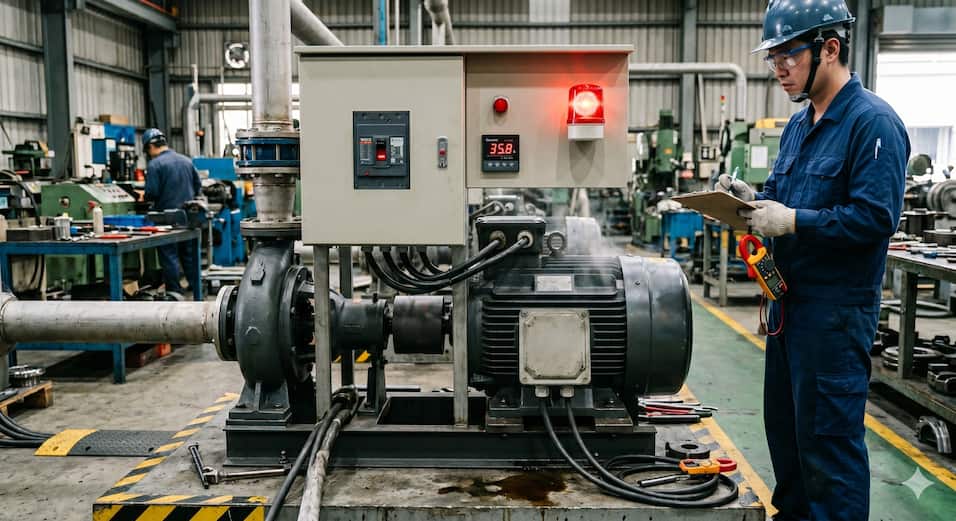
Motor Running Current Too High? Causes of Frequent Breaker Tripping and How to Fix It
Motor Running Current Too High? Causes of Frequent Breaker Tripping and How to Fix It
On the factory floor, excessive motor running current that causes a no-fuse breaker (NFB) or overload relay (thermal relay) to trip frequently is one of the most common problems for plant and maintenance staff. Tripping not only interrupts production and affects delivery, but if it recurs and the breaker is simply reset each time, the motor may keep running while overheating, eventually burning out the windings. Excessive motor current is usually a "result" rather than a "cause," and the real source may come from the load, cooling, wiring, or power supply. This article summarizes the common causes and a four-step troubleshooting procedure to help you quickly find the root of abnormal current.
Cause 1: Overloaded Load End
This is the most common cause. When the actual load exceeds the motor's rated output (e.g., an overloaded conveyor, a pump head beyond design, or higher mixing-material viscosity), the motor must deliver more torque, the current rises above the rated value, and overload protection trips. To diagnose, measure the running current and compare it with the nameplate full-load amperage (FLA); a sustained excess indicates overload.
Cause 2: Dust-Clogged Cooling Fan Without Maintenance
If the cooling fan at the motor's rear end and the housing cooling fins are clogged with dust and oil over time, cooling efficiency drops sharply and winding temperature rises. The higher temperature increases winding resistance and degrades insulation, so the current also rises. This is the most overlooked yet most preventable cause—regularly cleaning the cooling airway avoids it.
Cause 3: Sharply Fluctuating Load or Frequent Start/Stop
If the load fluctuates sharply (e.g., stamping or intermittent heavy loads), or the motor starts frequently, the inrush current at each start (up to 5–7 times the rated value) repeatedly hits the protection device and causes tripping. Applications with frequent start/stop should consider a variable frequency drive (VFD) or soft starter to reduce inrush current.
Cause 4: Wiring Errors or Loose Connections
If the wiring is not done correctly per the nameplate diagram (e.g., wrong Y/Δ connection, phase sequence, or voltage), the motor runs abnormally and the current is high. In addition, loose or oxidized terminal connections increase contact resistance, causing local heating and current imbalance. When checking, compare against the nameplate wiring diagram and ensure all terminals are securely fastened.
Cause 5: Three-Phase Voltage Imbalance or Single-Phasing
If the three-phase supply voltage is unbalanced (too large a difference between phases), the three-phase current becomes severely unbalanced and one phase's current rises sharply, tripping the breaker. A more serious case is "single-phasing" (loss of phase)—one of the three phases is open (a blown fuse or a detached contact); the motor still tries to run, but the current in the remaining two phases surges and can easily burn out the windings. This is one of the most dangerous electrical causes.
Cause 6: Bearing Wear or Mechanical Seizure
When bearings become stiff due to insufficient lubrication, wear, or foreign-object ingress, they increase the motor's mechanical resistance, so it needs more current to maintain speed; in severe cases the rotor seizes (locked rotor) and the current instantly surges to locked-rotor current and trips immediately. If operation is accompanied by abnormal noise, vibration, or temperature rise, inspect the bearings and transmission mechanism first.
Hands-On Troubleshooting Guide (4-Step SOP)
Step 1: Power Off and Visual Inspection
First cut the power and apply lockout/tagout (LOTO). Visually check whether the cooling fan and fins are dusty, whether terminal connections are loose or scorched/discolored, and whether the motor shows overheating marks or odor. Also turn the shaft by hand to confirm it rotates smoothly (a preliminary check for mechanical seizure).
Step 2: Measure Running Current and Compare with Rated Value
After restoring power, measure the three-phase running current with a clamp meter and compare with the nameplate full-load amperage (FLA). If all three phases are high, it points to overload or cooling issues; if the three phases are unbalanced, it points to voltage imbalance, loss of phase, or wiring issues. This step quickly routes the problem to either the "mechanical/load" or "electrical" path.
Step 3: Disconnect the Load to Locate the Source
Disconnect the motor from the load, run it with no load, and measure the current again. If the no-load current returns to normal, the problem is at the load end (overload, seizure, transmission resistance); if the no-load current is still high or unbalanced, the problem is in the motor itself or the power supply (winding, bearings, voltage).
Step 4: Check the Electrical Source
If an electrical problem is indicated, measure whether the three-phase input voltage is balanced, check the fuses and contactor for loss of phase, and confirm the overload relay setting matches the motor's rated current (a setting that is too low also causes false trips). If necessary, send the motor to a professional laboratory to test winding insulation and resistance.
Conclusion: Regular Maintenance and High-Efficiency Upgrades
In most cases, excessive motor current and breaker tripping can be prevented through regular maintenance—cleaning the cooling airway, checking and tightening terminals, monitoring running current and temperature, and confirming the overload protection setting all help avoid most unexpected trips and winding burnout. In addition, if a motor is old, inefficient, or fails frequently, consider upgrading to a Kuo Shuay IE3/IE4 high-efficiency motor. At the same output, high-efficiency motors run cooler with lower losses, reducing electricity and maintenance costs over the long term while meeting increasingly strict motor efficiency regulations worldwide. Kuo Shuay offers IE3/IE4 high-efficiency motors and custom selection services to help evaluate the most suitable replacement plan.
This website uses third-party cookies for offering the best navigation experience. By continuing to browse this website, you consent to the use of these cookies.